: 21 JUNE 2026, SUNDAY, 21:07:05
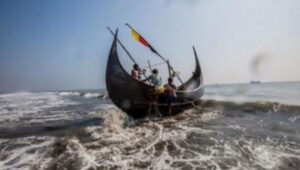
Fishermen in Bhola are facing mixed fortunes this fishing season, as the Bay of Bengal continues to yield disappointing catches despite the end of the government’s 58-day fishing ban, while large-sized hilsa are being abundantly caught in the district’s rivers.
According to fishermen, those who ventured into the sea after the ban ended on June 11 have returned empty-handed.
At the same time, fishermen operating in the Meghna, Tetulia, Kalabadar, Bura Gaurang, and Ilisha rivers are reporting significant catches of large hilsa, locally known as “King hilsa,” weighing between 2.5 and 3 kilograms. These fish are currently selling for Taka 3,000 to Taka 3,500 per kilogram in local markets.
Following the lifting of the fishing ban at midnight on June 11, hundreds of trawlers from Bhola’s coastal areas headed into deep waters with hopes of abundant catches. However, most fishermen returned to shore without catching enough fish to cover their costs.
Fishing activities have also been hampered by rough weather and strong waves caused by active monsoon conditions in the Bay of Bengal.
On Sunday, numerous fishing trawlers were seen anchored at major river ghats, including Kachhpiya and Samraj Fisheries Port in Char Fashion, Meghna Ghat and Mangal Sikder Ghat in Lalmohan, Meghna Fisheries Ghat in Borhanuddin, Tulatuli and Nasir Majhi Ghats in Bhola Sadar, as well as several ghats in Monpura.
Many fishermen expressed frustration over mounting debts and financial hardship.
“We went to sea with great expectations after the ban, but despite working hard for several days, we failed to catch the desired amount of fish,” said trawler owners Bashir Ahmed Majhi, Salam Sikder, Rafizal Majhi, and Kalam Sardar of Samraj Fisheries Port.
They demanded stricter enforcement against illegal fishing and stronger protection of marine resources.
Bhola District Fisheries Officer Md. Iqbal Hossain acknowledged the difficulties faced by fishermen. He said that while the government provides food assistance during fishing bans, there is currently no special support program for fishermen affected by adverse weather conditions.
He suggested that alternative income-generating activities and water-based employment initiatives could help support fishermen during periods of bad weather.
According to the Bhola Meteorological Office, the sea remains rough due to active monsoon conditions in the northern Bay of Bengal and adjoining coastal areas.
Authorities have advised small boats and fishing trawlers to remain in safe shelters until weather conditions improve.
Fisheries officials believe that favorable weather, combined with strict monitoring of illegal fishing and sustainable fisheries management, will help restore normal fishing activities.
While marine catches remain poor, rivers across Bhola are providing a much-needed boost to fishermen.
Fish traders at Shibpur Fish Landing Center said fishermen are catching large quantities of hilsa weighing between 800 grams and 1.5 kilograms, along with high-quality king hilsa.
A notable incident occurred on Saturday in Monpura upazila, where a fisherman named Kamal Majhi caught a hilsa weighing 2.4 kilograms in the Meghna River near the Abason Canal in Kalatli Char.
The fish was brought to Ramnewaj Fishing Ghat, where it attracted significant attention from traders, fishermen, and local residents. Following an auction, the fish was sold for Taka 8,100.
Trader Shahabuddin Majhi said the unusually large hilsa generated considerable excitement in the market.
District Fisheries Officer Md. Iqbal Hossain explained that there is a biological and seasonal reason for the appearance of large hilsa in the rivers.
According to him, such fish are typically more than two years old and may be approaching three years of age. The recently caught fish was found to contain eggs, indicating that it was likely migrating upstream for spawning.
“Hilsa can spawn throughout the year, but their movement into rivers increases significantly during the Bhadra and Ashwin months when rainfall, river currents, and water levels rise,” he said.
Local fishermen, traders, and fisheries stakeholders believe that despite poor catches in the sea –whether due to climate change, adverse weather, or illegal fishing — strong hilsa production in Bhola’s rivers could help offset some of the losses suffered by coastal fishing communities.
For now, while the sea continues to disappoint, the rivers of Bhola are providing a vital source of income and renewed hope for thousands of fishermen across the district.

For add

